The Keto-Electrolyte Connection
The ketogenic diet is one of the most effective ways to burn fat and improve metabolic health — but it comes with a catch. When you drastically reduce carbohydrates, your kidneys excrete more sodium, which triggers a cascade of mineral losses. The result? The dreaded keto flu: fatigue, headaches, muscle cramps, and irritability.
The good news: replenishing electrolytes can prevent or eliminate these symptoms entirely.
Why Keto Depletes Electrolytes Faster
On a standard diet, insulin helps your kidneys retain sodium. On keto, insulin levels are low — so your kidneys flush sodium (and other minerals) much more aggressively. This is completely normal, but it means your electrolyte needs are significantly higher than someone eating a standard diet.
The Essential Electrolytes for Keto
- Sodium – The most critical electrolyte on keto. Aim for 3,000–5,000mg per day from food and supplements combined.
- Potassium – Works with sodium to regulate fluid balance. Low potassium causes muscle cramps and heart palpitations.
- Magnesium – Often the most deficient mineral on keto. Supports sleep, reduces cramps, and aids fat metabolism.
- Phosphorus & Chloride – Support bone health and acid-base balance.
Keto Flu: Symptoms and Solutions
If you're experiencing any of the following in your first 1–2 weeks of keto, electrolyte deficiency is likely the cause:
- Headaches
- Fatigue and brain fog
- Muscle cramps or twitching
- Heart palpitations
- Constipation
The fix is simple: increase your electrolyte intake, particularly sodium and magnesium.
Choosing the Right Electrolyte Supplement on Keto
On keto, sugar is off the table — so your electrolyte supplement must be completely sugar-free. Watch out for products that use dextrose, maltodextrin, or fruit juice as a base. These will kick you out of ketosis.
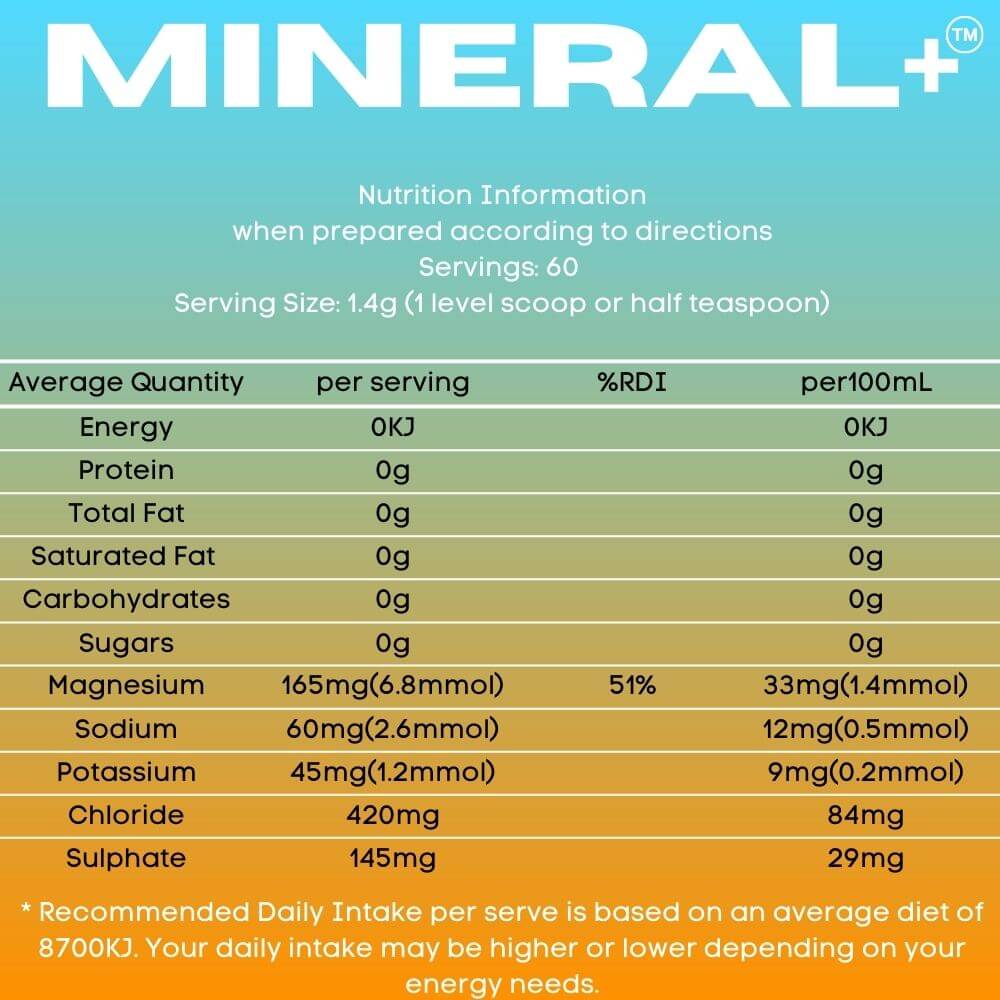
At Mineral+, our electrolyte range is 100% keto-compatible — zero sugar, zero carbs, and formulated with the exact minerals keto dieters need most.